Showing posts with label Writing. Show all posts

Tuesday, May 21, 2013

Thomas Covenant Review

The Chronicles of Thomas Covenant, the Unbeliever (The Chronicles of Thomas Covenant, #1-3)The Chronicles of Thomas Covenant, the Unbeliever by Stephen R. Donaldson
My rating: 3 of 5 stars

If you don't know what these books are about, Thomas Covenant is a modern leper who has lost his wife and most everything else. After an accident, he finds himself in "The Land", a land of fantasy creatures and people threatened by Lord Foul (the names in these books are not that original). Thomas' wedding ring is supposedly a powerful artifact to combat Lord Foul. But Thomas believes it's all in his head and doesn't think his choices matter. The people all believe in him, but he doesn't want them to. I wanted to like the books, but the writing style was very hard for me. Maybe I'm used to different styles, but it was hard for me to follow what was going on, and at times I got bored. I struggled to finish the first trilogy and couldn't bring myself to read the second. There were some good ideas, like Thomas refusing to shave to see if he would have a beard in his own world, although he then shaves it off and defeats the purpose. The concept, that you're responsible for your actions, whether they really affect other people or not, is interesting. Does it apply to things like World of Warcraft? Anyway, the descriptions didn't help me picture The Land very well, and Thomas was always whining and feeling sorry for himself, so it was a tough read. But it does take a different angle to fantasy than Lord of the Rings, where every character is perfectly good or evil.

View all my reviews

Sunday, May 19, 2013

Mythic versus everyday hero

ImageImage
What's the difference between Hercules and Frodo? While one is super strong, embodying everything the Greeks idealized, the other is short, a little fat, neither strong nor particularly smart. Both are equally fictitious. Hercules killed his wife and went crazy but became a god, Frodo nearly gave in to temptation and got his fingers bitten off and then lived a quiet life. So who do we like better? The demigod, or the hobbit? The mythical hero or the everyday one? Although there is more action with the mythical hero and there is more room for creativity, we relate better to the everyday hero, because, let's face it, we don't have superpowers. Many wish we did, but if we can do something important without them, then we feel we have accomplished something. That's the reason superheroes have to have supervillains: if Superman only faced off against street thugs, it would get boring really fast (which is why I never felt Lex Luther was a great archnemesis to Superman: he didn't have any superpowers of his own, and didn't feel much like a threat).
So with Lord of the Rings, there are superheroes (Aragorn, Gandalf) and supervillains (Sauron, the Nazgul), but the real heroes are Frodo and Sam, who navigate through deadly Mordor with nothing but their wits and, more importantly, their perseverance. Getting a protagonist too powerful makes the story boring (which is why the Greeks threw in the tragedy of Hercules killing everyone and being hated by Hera, so there is something he doesn't have control over). Even in video games, where getting stronger over the course of a game is a staple of most genres, the last boss should be stronger than the player and has to be represent the greatest challenge. Basically, the greater the odds, the more interesting the story becomes. But there should be a balance, or it won't be very believable. If Frodo suddenly fought off all nine Nazgul before facing Sauron himself, all with Sting, his credibility as the everyday hero would be shot. Likewise, if he always escaped Sauron's notice through a series of incredibly lucky circumstances and plopped the ring into Mt Doom without breaking a sweat except from the heat of the volcano, readers will feel cheated, and his challenge would be lessened because it was so easy (I once saw a youtube video saying that he should have just jumped on one of the eagles and flown over to Mt Doom and dropped the ring in. Easy, but there would have been no story worth telling, now would there?) Each trial should be tailored to the hero, something he could believably overcome but the outcome would be in doubt, that he might not be able to overcome.The less luck, the less Deus ex Machina, the more doubt as to the outcome, the better.
But we don't just read about ordinary heroes. There is room for the Hercules, the Bruce Willis, the Luke Skywalker, and other powerful heroes. Oftentimes, they start out as normal, maybe having gone to the gym or taken martial arts beforehand, but still ordinary. But then they get thrown into a situation and their powers increase through training or they find some innate talent they didn't know they had (Harry Potter's magic, Luke's Force). We see them progress (although often in snippets where we know they are training but don't see the details. In movies, accompanied by an upbeat, encouraging soundtrack), know that they're not perfect, but they grow into their power. Even still, they should be the underdog. It's all relative, and we relate to relativity.
So is it better to write about heroes of mythic proportions, or to write about everyday heroes who are made by their reaction to a situation? It depends on what the story calls for, what could be believable, but they must always be human. In olden days, in serious works, there was usually the tragic flaw, often hubris or pride, that in the end caught up with the tragic hero and sealed his doom. Not everything ended happily ever after, but many stories were better for it (I prefer Shakespeare's tragedies to his comedies). The audience might put themselves in place of an everyday hero easier than a mythic one, but might get bored faster with him as well.  So looking at the audience, the type of story, and how realistic it should guide an author what to choose. Oftentimes, it is someone in between. And as long as it is entertaining and doesn't strain credibility within the story, whatever is chosen is all right.

Reblogged from  http://sageeyesblog.wordpress.com/wp-admin/post.php?post=1460&action=edit

Saturday, May 18, 2013

Romance and Fantasy part 2

Heart_corazón.svg
A good romance within fantasy makes characters worth caring about, gives them more to lose if they fail in their journey, and provokes powerful emotions from the readers. But it can be hard. There are many that are over the top, and become unbelievable. Or too low key. There are characters where you wonder why they fall in love, and don't really have any chemistry, so it feels forced. Personally, I didn't care for the romances in Harry Potter. They felt a bit forced, so that everyone would be together and related in the end. Ginny didn't feel like she had much personality; she was just there so Ron and Harry could be brothers-in-law. Same thing with Hermione and Ron; I had no idea what she saw in him, although maybe from a female perspective it would be different, that she loved his humor or whatever. In the end, Harry, Ron, and Hermione stay together, but the romance elements didn't feel real to me. Also Edward and Bella in Twilight…from the perspective of a man, there's no reason why Edward should be so obsessed with her. She might be beautiful (although I don't find the emotionless Kristen Stewart all that attractive), but you'd think a hundred year old vampire would be able to judge beyond something so skin deep. She's a weak character and isn't very appealing to me, which is probably why many men don't like it, aside from being mushy. Another thing that happens in a lot of stories, including fantasy, is that the man (or boy) falls in love with a woman out of his reach, someone strong and independent maybe, and is pining for her, but eventually, they get together, and suddenly she becomes submissive and loses her personality, letting her new man do everything for her. People shouldn't lose what made them lovable in the first place once they hook up or get married.
Some authors seem to think that sex is the same as romance, that if they include descriptions of sex, it will make the readers fall in love with the characters. Some male authors use fantasy books to write porn (females as well, but often they write their own porn in romance novels). I feel that if the characters have sex, the reader doesn't really need to see it. Give them some privacy, even if they are fictional, unless it really has to do with the plot. We usually don't see the characters in the restroom; we don't need to see them in the bedroom. Graphic sex will probably turn off as many readers as it will attract, and the author's reputation will be damaged. So it should probably be left out. Both men and women are guilty of this.
Something else that often doesn't get shown is married love and romance. Often the characters are coming of age and at the end of the quest, they get married and the end, they lived happily ever after. Disney is partially responsible for this mentality. So many times, love is shown as good before marriage, but after being together, married people hate each other. A lot of sitcoms are based on this idea. But there are many things about romance that can be explored within marriage. It is different than young love, but not necessarily weaker, just not so full of drama. More stable. More enjoyable, really. If dating is a roller coaster, marriage is a road trip. Maybe not as exciting or scary, but at least you can hear each other talk, and there is still the anticipation of going somewhere together, that you're still on a journey.
In fantasy, love can be influenced by things that don't exist in real life. Love potions, spells that compel, magic that binds two souls together. Usually magic doesn't influence love itself, but can provide a counterfeit. True love can be what breaks curses and saves the day, like in Shrek. But despite what can be done in fantasy, love usually needs to be realistic for it to believable. Fortunately, love is the closest thing to magic in this life, so there is no real need to embellish it with magic to make it exciting. It already is.
There are several lists of good fantasy romances, mostly including female authors, as if men can't write romance. There is some bias in this, as woman are the ones judging. Like I said earlier, men write romance within a larger context of an adventure or other type of novel. If they were only to write romance fiction, they would probably be ridiculed and not have many sales. So beware, not all good romance comes from women, but can be hidden within other stories. Hopefully this post will get people thinking more critically about the romances presented. People want connection, want relationships, and reading about it can be rewarding, if done right. Here's to my wife, who's my fantasy and who taught me what real romance is. Thanks honey.
Reblogged from http://sageeyesblog.wordpress.com/2013/02/15/romance-and-fantasy-part-2/

Friday, May 17, 2013

Devils

Image
Devils and demons often play an antagonistic role in fantasy. They take on many different forms and come about in so many different ways. Some are malevolent spirits, others are creatures summoned from another realm, others come from the ground and have nightmarish bodies. All seem to be evil or at least neutral, and are often dangerous when summoned, kept barely under control, if controlled at all.
The concept is mostly associated with Christianity, where the devil, Satan or Lucifer, is a fallen angel opposing God's plan, and trying to lead men to hell. Some say he is the master there, others that he just wants people to be miserable with him. Some say he works alone, others with his demon minions. Most other religions have a devil or some other sort of adversary as well, although now people seem to want to focus on goodness and leave the devil out of it, ignoring him or not believing in one.
The image of the devil came in the middle ages, when priests thought that their followers were not scared enough by the devil, so they made an image meant to frighten people into righteousness. The devil had horns on his head, hooves like a goat, claws, and a tail. Kind of like a satyr, but red. Sometimes they gave him batwings. He used a pitchfork as his weapon. Other demons had similar characteristics. Usually ugly, they might also be beautiful, to seduce you.
Usually in books, these devils or demons don't look like the classical description. The most common is the spirit, since that is what devils are, if they exist (you don't see demons walking around, at least not how they are shown in pictures. People you know, however, like your in-laws if you're unlucky, might be personal demons for you). Sometimes they will possess bodies, a common idea in fantasy.
In games, sometimes they will be shown in a physical form. In Heroes of Might and Magic 6, the demon faction has 7 creatures, each representing one of the deadly sins. In literature, they represent the dark side of humanity, the nightmares, the fears, the depraved acts humans can commit. In this way, Pandora of mythology was the mother of all demons. They also often represent fire, or are represented by it, which, with Prometheus, acted the same way as the forbidden fruit of Adam and Eve: it brought knowledge to humans and the ability to act for themselves, separating them from animals. This knowledge burned with the pains of sin and the light of knowledge.
Since they are rarely, if ever, the good guys, they are a bit more one dimensional than other fantasy creatures. Because of this, and because people are more uncomfortable with religion, they are less and less common as characters. If thinking about using demons, be aware of what they represent and if they go long with the story, and use them in a creative way.

Reblogged from http://sageeyesblog.wordpress.com/2013/01/30/devils/

Thursday, May 16, 2013

Science Fiction versus Fantasy

These are two different genres that often get lumped together under the genre Speculative Fiction. I know in the library I go browsing and I find Star Wars next to Lord of the Rings. So often, they are together because people think: these are two genres that represent the impossible, so they should be together. I personally think they should be separated, but I can see where they are coming from. So let's define both of these.
Science fiction is usually defined as being grounded in reality and possible in some distant future. Fantasy isn't grounded in reality and admits the possibility of magic and supernatural creatures. Seems like it would be a pretty clear line separating them. In most cases, it is. But not always (of course, no genre is really clearly defined. There can be romantic thrillers or science fiction horrors). I'll go over the melding of these two genres farther down. But first, let's talk about what separates them
Lord of the Rings is fantasy. Someone wielding a gun in middle earth would be totally out of place. Many fantasy authors stop their world's technology growth before guns are invented. It makes it simpler, with swords and sorcery. Often the appeal of these worlds is the simplicity. Aside from unfair taxes and lawyers, the people didn't have to worry about modern problems like insurance, internet, mortages, car registration, subscriptions, paying the electric, gas, water, and heating bills, or voting in elections. Whether these things are improvements or not on life, who knows. But people like to fantasize about living in a simpler world, where going on a quest could make all the difference. Exploration, justice, politics, and religion are all themes explored in fantasy.
Asimov is science fiction. He based his books on what could be extrapolated from current understanding of science and the laws of physics. Exploration, politics, and social consequences of technology are all explored in this genre. It embraces the mortage and bill paying and complicates life even more with robots and space travel. Unfortunately, if you're a purist writer, traveling to other worlds is really limited, as there has been no realistic way suggested, that I know of, to surpass the speed of light. Even theories that haven't been disproven, like using dark energy to create a bubble in space, require so much energy that they would basically be impossible. Hyperspace, the catch all phrase for some way to bypass the speed of light, doesn't really have any explanations either. So much of science fiction is, in a way, fantasy, with guns and spaceships. So the definitions above don't always apply. Just remember this: sci fi deals more with technology, while fantasy deals more with magic. In crossovers, whichever element is emphasized determines the genre.
A perfect example of melding of science fiction and fantasy is an old movie series you might have heard of. Anyone remember Star Wars? Although it first seems very science fiction, there is one element that doesn't have any basis in science (despite George Lucas' attempt to inject it in episode I (Mr. Lucas, please read my post on magic and how it should be full of wonder)). The force changes everything. While subtler than some magic, it is there and plays a big role in the movies, despite Han Solo's attempts to deny it (which is kind of odd, since 20-30 years earlier, the galaxy kept peace through the Jedi and no one seemed to doubt them). So despite being labeled science fiction for space ships and blasters, it has some strong fantasy elements (the force, prophecies, monsters, swords, etc)
I enjoy fantasy more than science fiction, because of the element of wonder, of the existence of the impossible. Science fiction often tries too hard to explain everything. Not to say I don't read science fiction, though. Orson Scott Card is a favorite, including his Ender books. There are others as well, but generally I prefer fantasy. Sometimes, in crossing over between the two genres, it is done well (ironically, aside from Star Wars, the best I've seen in crossovers is in video games, especially the Final Fantasy series). Sometimes, though, I don't really enjoy it much. Anne McCaffrey's Dragonriders of Pern books, though I thought I would like them for having dragons, my favorite animal, but by making it based in science, the books lost their magic for me. Others might not have this problem. It all depends on your tastes and what you like.
For more information, please reference this site.

Reblogged from http://sageeyesblog.wordpress.com/2013/01/21/science-fiction-versus-fantasy/

Janet and Jim

Another story I made in a writing class. Modern setting, nothing fantastical.
Janet entered the tall apartment building. It had been around for decades, without much updating to it. She had to go up three floors to get to her place. Her high heels hit the concrete floor as she entered, echoes announcing her presence. The groceries in her hands felt heavy enough to burst through the sacks. Perhaps it had been a mistake to visit the salon before buying food, because she always had to look her best when getting her manicure, but the combination of high heels and heavy groceries made her wonder if she would get blisters on her feet. After all, the nearest bus stop was three blocks from her place, and with the car in the shop, it was the only means of transportation she had left. She didn't think it should have been all that unusual to bring groceries with her on the bus, but that day everyone must have agreed to make her look like a fool.
On the way home she had stopped three times after getting off the bus to set down the bags and examine her hands. One of the nails broke during the trip home, and there were creases where the plastic had bit into her hands. One time, a dog had come over, sniffing her food, and she had to clumsily chase it away without tripping. Her husband always told her to wear shoes with wider heels, but she thought they looked ugly. If only he had stayed home today like he had said he would. Then he could have gone shopping, or taken care of the baby.
Jim was a great husband and she knew she should not complain, but he sometimes acted strange around the neighbors, as if he did not trust them. One time he told her he thought the woman above them had drilled a hole through their ceiling and was spying on them. Most of the time, his theories were so funny, she had to stop herself from laughing. She still was not sure if he was serious or if he was joking. But all of this had not stopped him from being a good husband and father.
Maybe because she was thinking of him that she began feeling it. When she on the last set of stairs before getting to her place that she realized something was wrong. It was too silent. There was a tenseness in the air. She chastened herself for getting so worked up over nothing. She was imagining things. Yet she couldn't help but feel something had happened. Her steps became slower, more languid the closer she got, as if wading through water. Her heartbeat was the only thing that sped up. Even these warning signs, though, could not prepare her for what she saw when she arrived on her floor and saw her apartment ahead of her. With a gasp, she let go of the groceries, food spilling everywhere.
Janet looked at the crime scene, all emotions numbed. The blood that stained the floor cruelly held her gaze. How could that have been her favorite color? She idly twisted her curly hair, thinking that it was nothing like the color of blood, even though she had been called red headed all her life. The man who had died, her neighbor, was middle aged, only a little bit older than her husband who had first asked her out when she was still in high school and he in college. She wondered if her life would come to such an abrupt stop when she reached this man's age. What would people think of her? She was nothing more than a housewife, although her mother would have told her that it was nothing to be ashamed of. Who would remember her if she died right now? Her son was too young still, her husband would obviously remember her, at least until he remarried. She did not have many friends, since she had moved here up in the northeast to be with Jim. Her father always complained about that in the family reunions she could attend, saying that she was turning into a liberal Yankee.
Through the far apartment window, she saw the falling orange leaves. The police were telling her to leave now, that there was nothing to see, but their words were like butterflies, slow but elusive. How silly they were. There was plenty to see. She shivered.
"Ma'am, please allow us to conduct our investigation. If you want, we can assist you with your groceries." She looked down at the bags, one yellow at the bottom from the broken eggs, and then back at the man in the uniform. He must have taken that as a nod, because he looked over at a reporter and told him to help her. Vaguely, she saw him resist, but he soon gave in and started collecting her bags as well as the food that had fallen out. Annoyed, he nodded for her to lead him to her apartment, but she wanted to continue looking through the open door, past the yellow tape. In the back of her mind, she knew it was morbid, but that part was not in control at the moment.
This man, Harold something, had been her neighbor for about a year. He was single and apparently never had been married. Her husband always commented that a man his age should have settled down a long time ago, that he must be hiding something and that she should stay away from him. She had not been so suspicious of Harold, and sometimes had pleasant conversations about nothing with the man. Not that they had ever been close friends, although today she had trusted him with...
Janet swore and ran into the man's apartment, breaking the yellow tape and ignoring the yells of the police. "My baby! My baby!" Where was he? If he was...she would never forgive herself. Panting, she rushed to the crib that she had left with Harold when she went out. She looked in, but there was nothing inside. Where was he? The police grabbed her arms and pulled her out, forcefully. She struggled. She did not care about not disturbing the crime scene. They only got her out with a big struggle, leaving her crying. She slumped against the wall and put her face in her hands. Someone came over and tried to comfort her, but she ignored him. The tears flowed between her fingers.
Later, she was in her apartment. The reporter had brought in the groceries and then had taken the opportunity to interview her. Each question had provoked more tears. Why couldn't he leave her alone? The police then told her they would do everything they could to locate her baby, since they had found no other body except that of her neighbor. These had been the longest hours of her life. Now they were all gone and she was picking at a bowl of macaroni and cheese mixed with tears. She heard the door open. Getting up, she tried to prepare to tell Jim the bad news. He had not answered his cell phone all day. She didn't think she would be able to without becoming a total mess. She had cried for hours after getting home, and the tears had recently dried up, but rainstorms threatened to fill up the empty riverbeds of her face again.
When he came into full view, Janet gasped. "Jason!" Her son was alive! She ran over to Jim and took her son from his hands. "How, where was, when, I was so, what?" The cog that linked her mouth and mind stopped functioning. She could not believe it. Even though her son was frowning, his face looked as if it were glowing, the most beautiful sight in the world. She imagined that he was happier now that he was with his mother. She stared into those blue eyes, her hours of grief healed in the instant they blinked. She stood there with her son for several minutes, crying, ignoring everything around her, including her husband.
"Honey," Jim eventually began, his tone not reflecting her delight. "Why did Harold have our baby?" Janet still couldn't speak, though, and his words sounded like another language. She looked her baby in the eyes. "Honey. I came home early and heard Jason crying, but it did not come from our apartment. When I realized that Harold had him...like I always said, I never trusted him, and I thought he had...or you and he..."
"Poor Harold!" Janet exclaimed, snapping back to reality at the mention of her deceased neighbor. "You do know what happened, right?"
"Why would I know what happened?" Jim said defensively. Then his cheeks colored. "Oh, that. Yeah, it's a real tragedy. Good thing I got Jason out of there before it happened."
"Wow, I hadn't even thought of that. Here I was, sitting at home, worried sick, and you protected our son the whole time. You really are a great husband and father, Jim." Janet looked at him earnestly. Jim scratched behind his head, forcing a smile. His sandy blond hair was reflected in their son, who burped at that moment. Janet turned to her husband. "Jim, why are there dark spots on your pants?"
Jim looked down at his pants and looked like he had woken up from a strange dream. "I...went to check on the car in the shop, honey. Behind the counter, they were showing highlights of the game last night on the TV, so I leaned in to get a better look. I guess it was pretty dirty, or greasy, because after, my pants were like this. Worse, even."
"How is the car, dear? You wouldn't believe what I had to go through today without that thing, and all to come home to this." Tears started trickling down her face, and she tried to wipe them, but with Jason in her arms, she had a bit of trouble, having to shift the baby. Jim came over and hugged her, wiping the tears away himself as if it would erase all the pain. Janet looked at him and pouted. "Promise me this will never happen again, dear."
"What do you mean? I can't stop people from dying." Jim avoided looking into her eyes.
"Just promise. Please."
"Fine. You won't have to suffer through this any more."
Later that night, Jim got up and went to get a snack. Janet watched him go, pretending to be asleep, but in reality she was wide awake. The day's events had taken a lot out of her, yet she could not fall into darkness's forgetful embrace. She was relieved her son was fine. She felt bad that Harold had died. But there was something that weighed down on her mind more than anything else, and she had no idea what to do about it, or if she should tell anyone about it. Sometimes she wished she didn't know Jim so well.
This day had brought so many surprises, and Janet did not know how to handle them all. Sure that Jim was occupied for the time, she quietly picked up the phone receiver. She needed to get this off her mind, and perhaps it would be best this way. What was someone to do in this kind of situation? Maybe she should wait until he was at work the next day. But she would not be able to sleep with this on her mind.
Her fingers trembled as she pushed each button. Who knew three numbers would be so hard to punch in? When a voice came through, it felt glaringly loud. She looked up and glanced around, hoping Jim hadn't heard her. It didn't look like he had, so she began whispering into the receiver.
"Hello. My name is Janet and I have some information on a murder committed today..."
"Miss, there is another number you can call to help the police in solving a crime. We deal in emergencies."
"But this is an emergency. You see, I am in the same house as-"
Janet dropped the phone as she felt his hand on her shoulder. It bounced on the floor a few times before stopping, and then the only sound in the room was the static noise coming from the receiver, almost making out understandable words.
"Janet," Jim whispered. "That was not a good idea. Not good at all."
He spun her around and in the dim light, with a faint green glow from the phone buttons, she looked into the face of her husband. Except he was not her husband anymore.
This was the face of a murderer.


First Contact

The grass bent beneath his boots as he stepped outside of the ribbon box. What would it feel like if he went bare foot? Wet? Raspy? Like carpet? Green spread out all around them, welcoming them to the small island. Kaleb took off his helmet and took a whiff of the air. So fresh, so salty. The ocean roared in the distance, jealous of the attention the grass received.
"That's dangerous, you know," his partner Foelhe commented, walking past him.
Kaleb shrugged. "If anything happens to this piece of property, they'll sew me right back up, and probably stick so many needles in my behind, I'll look like one of those…what are they called again?"
"Porcupines."
"Yeah, one of those." He looked around, finally focusing on the sky. Bluer than the ocean. Sure was different than from where he was from. "Think we'll see one of them?"
"Doubt it."
"Stop playing around, you two, we have a mission to fulfill," said Dalin, forty meters away, walking on the beach with his own partner. His voice sounded muffled, coming from the headset inside the helmet Kaleb was carrying. Foelhe shook his head as Kaleb sheepishly put it back on.
The two of them walked in silence until they reached the edge of the water. No sign of threats. Maybe it wasn't so dangerous here as most people thought. It certainly didn't look to be harboring danger. Kaleb watched the ocean steal his footprints from the beach.
"Call down the ATV, this island looks to be uninhabited, but to the northwest, satellites suggest there are people living there. A wonder they never made it to this one." Foelhe tapped something on his wrist. Kaleb did the same, instructing the vehicle to drive over and deposit the boat in the water. He didn't like the rubbery foam molding to his head nor the plastic visor that was fogging up.
A few moments later, they were speeding to the northwest. There were six of them altogether, three companionships. The boat went fast enough to see the next island growing on the horizon, but the fish in the water were dark blurs. Not even the screen in his visor could identify them quickly enough. Governmentally issued, they were.
The ocean stretched out as far as they could see, no less infinite than the stars. Each wave glistened in the sun like a show of lights. Kaleb sighed. What would it be like to immerse himself under that surface, without any body armor on? Opposite the empty vacuum of space, being filled instead of emptied? He couldn't believe he was here; it didn't feel real. So close to a world that touched each sense, yet a barrier that held him back.
Other, larger shapes began swimming after their boats. The shapes couldn't keep up, but it was obvious they were trying. They weren't just fish. Still, the screen couldn't identify them. Either it wasn't advanced enough to cut through the interference of the water, or there was no file archived with information on these creatures.
"What do you think those are?" he asked Foelhe. The only response was a shake of the head within his helmet. The others didn't seem interested either.
Soon they reached the beach, this time not covered in fine sand but in larger pebbles. Some of the rocks seemed sharp enough to cut open his feet, if he ran barefoot. Kaleb stepped out, his feet creating small holes that filled themselves up with rocks and water as soon as he left. His past prints on the world were being erased along with the past. He only existed in the present.
It seemed calm at first, but there was tension in the air, penetrating their helmets. No one said anything, although Foelhe kept his hand at his side, fingers clutching the handle reflexively.
The first sign of intelligent life was a broken spear hidden in the rocks. At first it looked like a wet stick from one of the trees, but the screen pointed out that there was a sharp rock tied to it. It also pointed out that something had urinated on it five hours ago, as well as a multitude of other useless details. But it couldn't tell him what had been following them.
"Is this an accurate level of their technology?" Dalin asked, more to himself. "I wish those up high would have shared the classified with us."
They stood there for a few moments, observing the spear, as if it would suddenly start talking to them. Kaleb felt impatient. There was life out there, waiting for them, but no one could get past the spear and begin contact.
"Come on, Foelhe," he said on the private channel. His partner looked at him wearily, sighed, and started following him to the growth at the edge of the beach. The others glanced at them, but then went back to analyzing the spear.
As soon as he parted the first leaves, longer than his body, the alarms went off in his suit. At first, he thought it was danger in front of him, but after a moment with nothing happening, he realized the danger was behind. Swiveling, he found Foelhe already rushing back to the others. The waves were high, nearly engulfing the ATVs. Strange. Then his screen pointed out the obvious. There were more than five others on the beach with him. There looked to be about ten, with more coming from the sea.
The fish!
These fish had hands, feet, and heads like humans. Except they were blue, with white stomachs and they were covered in fins, including their faces, replacing their hair. Crawling out of the water, they started rising onto their back legs. Some wore basic loin cloths, others nothing, although there didn't seem to be anything to see. A few looked feminine, but it wasn't as obvious as it would be on humans. His screen pulled up close ups of one of the faces. It was smiling, but with the sharpened teeth, the smile looked devious and dangerous. They approached the men with little apparent fear.
One got close to Dalin and spread his arms wide, still with that toothy grin, Dalin raised his gun, but the creature just took hold of it, and shook it, like it was shaking a hand. It was either mocking Dalin, or really playful and innocent. Dalin took it as the former.
"Get away from me, you monster!" he screamed. Kaleb heard it over the channel, but whether the actual creature did, he wasn't certain. Dalin pulled his gun back and aimed it at the blue humanoid.
"No Dalin!," Kaleb yelled. This was not their mission.
Too late. The gun tore a hole right through the light blue abdomen, searing everything the energy touched. The creature collapsed, dead. The others looked horrified. Some jumped back into the sea, others rushed forward to really attack the humans this time. Kaleb found himself running towards them, not sure what he hoped to accomplish.
Foelhe was the next to act, Dalin shocked at what he had done. He shot another of the blue men from afar. It fell back and its twisted bones could be heard from where Kaleb was standing. With the help of his helmet, of course, but that noise haunted him. Foelhe was going to take out another when Kaleb pushed him to the side. They both fell down.
The others with Dalin took aim, hesitantly. The hesitation cost them. Somehow, a large wave reached them, pulling them down to the depths. They let go of their guns and tried scrambling out, but out of the wave came more of the blue things, grabbing them and preventing escape. As long as they had their armor on, they would be all right, but if the creatures found a way to break in, they would drown.
Kaleb watched helplessly as three of them disappeared. Dalin was running, not trained against this type of fear. Foelhe punched Kaleb off of him.
"What are you doing? We have to kill them, or they'll take us down with them."
Kaleb didn't have an answer, but still couldn't allow his companion to slaughter the natives. Their job was to explore, make contact, and set up a friendly base. Killing them all would put an end to that idea, permanently. They might have ended it already.
His visor was full of mud and pebbles, so he tried wiping it clean, but didn't get much off. He did see Foelhe's figure get up, though, and take aim again. "Stop it, Foelhe! We were to make contact, not come as conquerers."
"Maybe these savages need conquerers," Foelhe said. Kaleb imagined him sneering. "We were never going to lower ourselves to their level. We were going to civilize them. Make them in our image. They have nothing they can offer us."
"What about control of the waves? Maybe they could teach us," Kaleb tried to reason.
Foelhe snorted. "They weren't controlling the waves, they saw it rising and swam in it. Now stop annoying me, I have to show them their place."
Kaleb stood up, placing himself between Foelhe and the natives. His back camera showed that the natives stopped chasing Dalin and were looking at him curiously. Maybe he could convince these they came in peace.
"Kaleb, you are making a mistake. I didn't come here to try to learn a language, or make peace offerings to these primitives. I came because it was the only way to get these suits and guns outside of a virtual sim. I want to hunt, and these violent monsters make the perfect practice."
He couldn't believe what he was hearing. "You're being recorded, you know."
"And I'm fully justified in everything I do. I doubt the men up top will care enough to listen, anyway." Foelhe waved his gun in Kaleb's direction. Kaleb spread out his arms in protest.
"I am the senior companion," Foelhe said. "You have to obey my orders. So get out of my way."
Kaleb felt his suit struggle to obey, but he quickly overrode it. Foelhe's influence wasn't as complete as he thought.
"Fine. There are natives that want to kill me. You will not let me defeat them myself. So I must use force." With that, he shot Kaleb.
It was a low setting, a warning shot, just stunning him. Fear entered into his mind. Foelhe was more dangerous than any animal on this planet. He had the mind of a killer, but had never had the chance to use it until now.
Foelhe was between Kaleb and the natives. Kaleb tried to focus his attention on himself. "You don't want to do this, we can still make peace."
Looking at him, Foelhe laughed. "You're not going to change me, Kaleb. If you don't want to be a murderer, sticking to some vague principle of rightness, do that. But I am not limited by your moral system."
By then, some of the blue natives had crept up behind Foelhe. They looked ready to attack. Kaleb began to talk to Foelhe again, ready to say anything to distract him, but Foelhe ignored him, turned around, and started blasting the creatures.
The back camera.
The screams would haunt Kaleb's mind for many sleepless nights, if he ever walked away from this. Taking out his own gun, he resolved to stop this. His finger reached the trigger, but the vague principles of rightness made him hesitate. The hesitation cost him, as Foelhe immediately turned around and shot him. This time at full power.
Kaleb breathed, straining. Finally he was able to feel the sand as it crept into his armor, now compromised. His bosses would not be happy with that. But it did have a unique texture. Foelhe's voice was no longer coming through the speakers, but his movements showed his glee. Vision going double, Kaleb shifted his gun in the sand. Only one shot. No suit-aided aiming. It was all him.
Kaleb stayed silent as Foelhe's screams mixed with the weeping natives. Dalin and the others were nowhere to be seen. Hopefully he had made some sort of difference. It was cold, even though it wasn't supposed to be cold on the beach except at night. The sun was shining. It looked different through the atmosphere. Not so lonely.
Both Foelhe and Kaleb died around the same time. Only thirteen point eight five seconds separating them. Dalin and his subordinates remained down there, but Helman decided to let them fend for themselves for a bit longer. His interest in Foelhe and Kaleb occupied his mind right now.
He went to the pod. Gas steamed out as it opened. Waving his hand to clear it away, he looked in, seeing a familiar shape. Kaleb's body looked like a baby's, cuddled up in a fetal position, with only skintight underwear on. He looked cold. Wires were coming out of every part of him.
A meter away, another pod opened. Helman put himself between the two. Foelhe's body looked much the same as Kaleb's from this perspective, just that his skin was a bit lighter.
Slowly, the two of them awoke, fingers twitching, eyes moving before they finally opened. Kaleb let out a breath of relief. Foelhe clutched the edge of the pod, eyes open wide.
"Well, good news for both of you. You're not dead." He let them take that in, since he was sure they didn't want to see him in an afterlife. "You never went down to the surface. That was a lie. You're still here, in Zeta. We got you all dressed up in your environmental suits, and had you sit down in what you thought was the ribbon, then drugged you and brought you back here."
"That sounds like a lot of work," Kaleb said, words blurred by a trembling mouth.
"The suits walked here on their own and deposited you," Helmen said with his tight smile. "This whole thing was a test. We needed to know how well you would handle it."
"So did we pass?" Foelhe asked, anger lacing his voice like an iceberg.
"I think we all know the answer of who passed and who didn't," Helman said simply. Foelhe glared at him, but he didn't even see it as he was looking at Kaleb. "Us men up top do listen."
"So what happens now?" Kaleb asked.
"You get to go down with others who have passed, if you want. You see, none of our technology works down there, except for the most primitive devices that don't rely on electricity. No one knows why that is, and we need someone to find out. Someone who will establish relationships and find the information we need," he said, finally looking at Foelhe. "Not someone who will think he's better than the sentients down there,"
Kaleb smiled. "Someone to make first contact."

Races, Species, Creatures, Cultures

Like I have mentioned in other posts, one of the ideas I want to explore in my stories is how humans would react to other sentient species or races. I want to use familiar concepts for fantasy, so right now I don't have anything really new, but I don't know if they've all been together before. The working structure I have set up for the races are as follows.
Humans (Humans, dwarfs, centaurs, etcs) Norsh and Greek influence
Faery (Elves, fairies, nymphs, etc) Irish and Greek influence
Orcs (Orcs, goblins, ogres) European influence
Demons (Demons, devils, imps, etc) Christian influence
Undead (Skeletons, vampires, zombies, etc) European influence
Feral Creatures (Minotaurs, djinn, hydras, etc) Middle Eastern, Greek, and other influences
Looking over this, a lot does seem to come from Europe and especially Greek myth, partly because, as far as creating interesting creatures goes, they are some the richest, but other creatures from myths all over the world are welcome, and I am researching them. I just want to avoid creatures that are just big animals, like giant spiders, and too many half human half animal combinations, like centaurs, satyrs, dryads, etc. If there is something obvious that I am missing, please let me know in the comments.
As far as cultures go, I want to be much more diverse, taking from cultures all over the world and through history. For example, I would like to make some of the elven cultures mirroring principles of honor held in Japan, especially the before their integration into the modern world.
So many people think that their culture is the best and only one worth having, even though it is always changing through time and geography. Many conflicts in history have been with cultural clashes, everyone thinking their way of life was better. But if one journeys through different cultures, opening oneself up, they realize their way of life is but one in a buffett of many others. There are good and bad things in each culture, as well as good and bad people. We just have to get along, respecting differences.

Reblogged from http://sageeyesblog.wordpress.com/2013/01/06/races-species-creatures-cultures/

Wednesday, May 15, 2013

Magic Costs

In my last post, I talked a little about magic. One of the things mentioned is that magic needs to have limits. One way to limit magic is making it cost something. You basically need to make an economy for the magic. So I compiled a list of costs that might be involved to use magic. It is by no means exhaustive, and if you have any other ideas, please comment.
The following are ideas that can be used as 'magic currency' and put a limit on the power of a magic user:
Mana, mp, mental energy
Physical energy (makes you tired)
Blood
Water
Rare ingredients (eye of newt, etc)
Sacrifice person, animal, body part, etc
Heat
Ingested metal (Mistborn series)
Color (Warbreaker)
Concentration
Memorization
Time
Strength
Age
Hunger
Electricity (technology)
Ammo (like guns)
Losing a sense (like sight)
Available only under certain circumstances (midsummer's eve, after liking this blog, etc)
Complex rite performed or symbol made
Making calculations
Dancing or singing
Using a special artifact (sword, wand, etc)
Faithfulness to a god or demon
Powerful emotions
Cards, dice, or luck
Lifeforce of an animal or person
Adherence to a strict code
Horoscopes
Having a likeness connected to an object or person (voodoo)
Literal money
Using a special language
And the list could go on and on. Any other costs you can think of, please comment. The more creative, the better. Magic doesn't always have to be portrayed as some old man reciting from a dusty tome.

Reblogged from http://sageeyesblog.wordpress.com/2013/01/21/magic-costs/

Dragons

dragonmonoprice
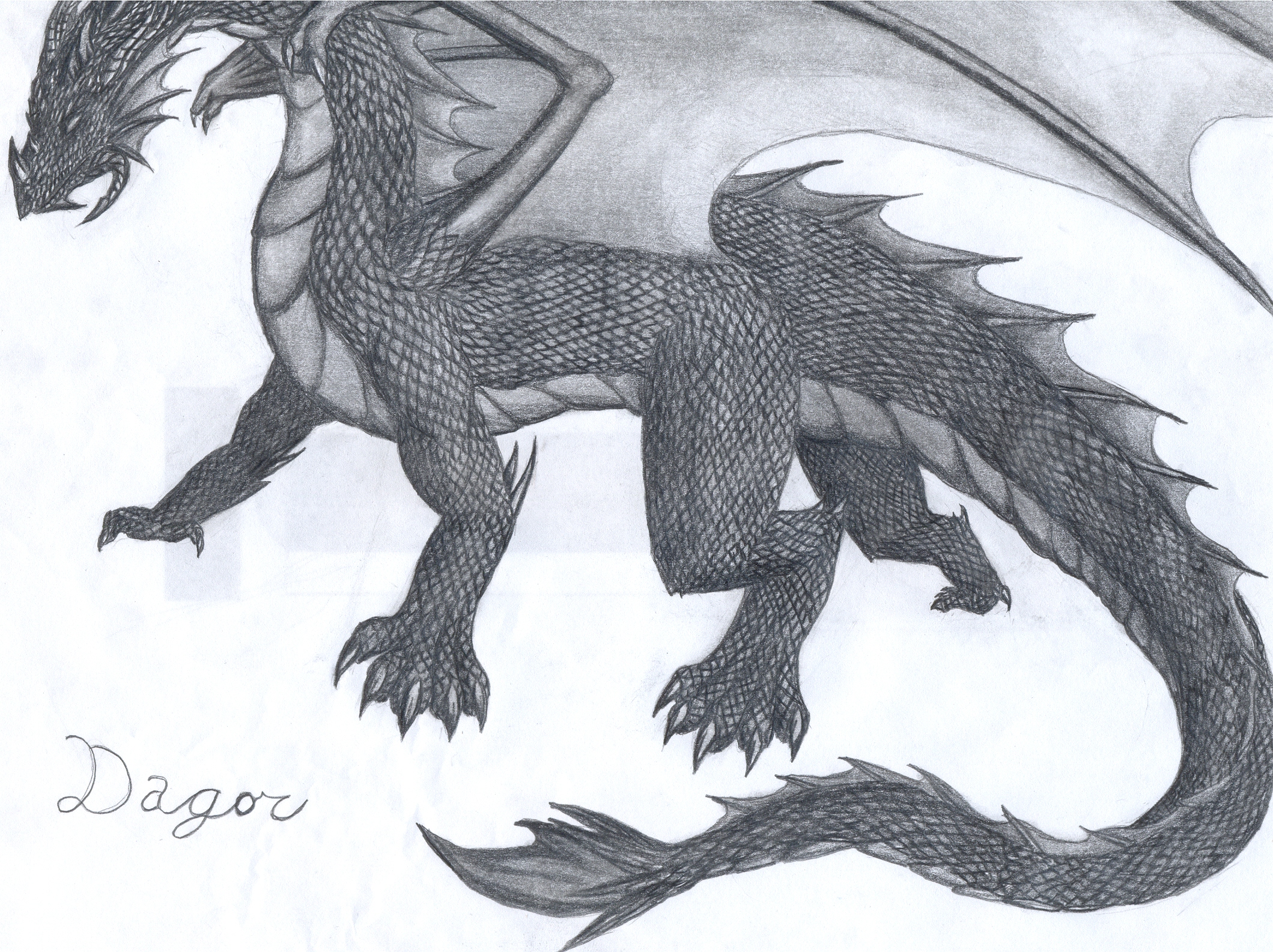
Dragons have invaded legends in many cultures of the world. From China to Europe, ancient to modern, these are probably the most famous creatures never to have existed (as far as we know). They come in many different forms and sizes, moralities, and intelligences. Some have wings like a bat and breathe fire. Others don't have wings, but still fly. The only animal in the Chinese calendar that doesn't exist is the dragon. So why are they so pervasive?
Traditional dragons have been enemies of mankind. They represent our fears and a challenge for man to overcome. They are huge, as we are afraid of things bigger than us. They can fly, going where we can't (especially before the invention of airplanes) and have greater mobility and speed, able to corner and outmanuever us. They breathe fire, something that normally only humans have access to, so they put themselves on a level with us, aside from fire's extremely destructive nature. They are similar to lizards, as opposed to us mammals, making them alien, aside from the hard scales that reflect the armor knights would wear. Many could speak and were as intelligent if not more intelligent than humans. They have keen senses and sometimes magical powers. With all these attributes, dragons represented the ultimate challenge men could face, especially in medieval Europe. Knights who could slay a dragon were the ultimate specimens of manhood, so it isn't surprising that legends show the knights of the round table and saints like George slaying dragons. Each challenge had to have a reward, so the dragons either guarded treasures or damsels or both.
dragon
Humanity doesn't have a natural enemy. While it is true some animals like wolves or tigers might kill individual humans or small groups, human society has nothing living that challenges it for dominance, aside from other societies and conflict within. So the theme of many fantasy stories is having some external force, like dragons, orcs, or even aliens, threatening humanity, to deflect the guilt we feel in being our own worst threat. It also deals with uniting humanity against a common threat, as there is an unspoken understanding that unless we have another group to fight against, we break into smaller groups and fight among ourselves, which is why utopias don't exist.
Dragons can also represent other things than threats or challenges. They can be symbols of earth or nature and might have access to ancient wisdom. They might act as godlike figures, for good or evil. They can be beautiful and represent the beauty of nature. They can even represent the human spirit, in a different form.
scan0201
Some don't prefer to have dragons in their stories, but I do like them, if they're not overdone. Unlike some other tropes of fantasy, like elves and dwarves where few venture out of the set standards, dragons have a lot of potential for being used uniquely each time. Because of this, they can enrich a story instead of bogging it down, obviously when used correctly. Because fantasy is a genre of wonder, having these great beasts to wonder at fits well with the genre.
One last word on dragons. The largest land creature alive is the elephant, but they are small compared to dragons of myth. Elephants can't even jump because they would break their bones. Dragons fly. Obviously, the dragons we dream of can't exist in this world, and anyone writing about dragons might want to consider that, either changing their world or figuring out how dragons would reasonably exist. Magic is the most obvious answer, what most people use, or they just don't even want to think of the ramifications. Now you might ask, what about dinosaurs? Pterodacyls flew, and they were bigger dinosaurs than elephants. If they existed, dragons shouldn't be too much of a stretch. Except they might have lived in conditions much different than ours. I read through this site, www.dinosaurtheory.com, and I'm not sure if the science is correct, it doesn't seem to be a very popular theory, or at least widespread, but it does at least make you think. I suggest you read it just to get thinking about worldbuilding and to analyze the world we live in. It is not so permanent and common as we might think.
Here be dragons.

Reblogged from http://sageeyesblog.wordpress.com/2013/01/19/dragons/


Omegasimple

Fantasy And Religion

This is an interesting topic, because there are so many way to approach this. I will only comment briefly for now, but I will try to provoke thoughtfulness. One way of showing religion in a fantasy story is having a religion, often times based off of Greek or other ancient myths, and having it be real. Gods are real, and they interact with humans, and they give humans powers. Like the Greek gods, they are imperfect, have their jealousies and wrath, and sometimes can be jerks. The people can decide which god to worship, or sometimes decide not to worship at all, because they are not worth worshiping, being imperfect, human. Basically these gods are powerful immortals. There was a series called The Tidelords by Jennifer Fallon that dealt with this idea. I'm a bit ambivalent about the ending, but the series was interesting. Other stories show these types of gods as representative of forces or ideas, again like the Greeks. American Gods by Neil Gaiman dealt with this idea, and if the people stopped believing, the gods lost strength. Others have done the same. Sometimes, there is no god, and the author is clear on that point. I personally don't enjoy the idea of fantasy telling me there is no god or supreme being, since there is magic and prophecy, which has to come from somewhere. Many authors who don't create their own gods imply that their world is like ours: most people aren't sure one way or another. Sometimes there are false gods, who deceive, or false priests.
There are many way to portray religion, but often the default, which in my opinion is entirely too easy and lazy, is to have the position of religion being bad, that the leaders are corrupt and want power, and sometimes the plot is about unmasking them. While there is no doubt that has been the case in our world many times, it is too simplistic to say that there is nothing good about religion and it is all false. Much good has come from religion, as well as bad, just like any other human (imperfect) institution. So portraying religion as evil or only for the foolish, when so many good and wise people in the real world believe devoutly, is foolishness in itself. There must be something good in the religions portrayed, or no one in the imaginary world would flock to them. Humans need to believe in something. Even science can be called a religion. Anyway, my point was not to offend anyone out there. you probably guessed I'm religious. I don't hate anyone for not believing, and I see why many people choose not to believe in any organized religion, but if you're writing a book and you want to include this topic, there should be some balance, even if you're an atheist. I hope this gets people thinking, at least.

Reblogged from http://sageeyesblog.wordpress.com/2013/01/17/religion-and-fantasy/

Fantasy Races

One of the themes in my books is racism, and so I wanted to have different races to explore that. How would humans act if confronted with another race or species that was as smart as they were. Science fiction sometimes deals with that, finding alien races, but fantasy does as well. There are the normal ones, like dwarves, elves, orcs, etc. Some authors, like Tolkien, have used these familiar races (or in his case, practically invented them), while others create their own races, often similar but with different names (trollocs as orcs from The Wheel of Time). Others just stay with humans and maybe some creatures (Song of Fire and Ice). I am writing thinking of using the familiar races and creatures, because they are familiar. I will add my own take on them, but right now, the names are the same. I felt that just changing the names wouldn't do much since people will think of them that way anyway. Anyone have any ideas on this? Comments? Should I have made some completely different races that don't look like humans at all? Would people be able to identify with them if I didn't? I feel like taking the Harry Potter approach, and using the familiar, although in a different way. But maybe someone can convince me to be completely original with this. Who knows?

Reblogged from http://sageeyesblog.wordpress.com/2012/12/30/fantasy-races/

Crucifixion

Here is a short story (not connected to Sage Eyes) to give you a taste of my style.

Crucifixion
John Remalto knocked on the door. Knock knock. They had told him this would be a story that only he could do, that they only trusted him with, no one else. He had no idea what was so special, but then, as an award winning journalist, it was his job to find out.
After two minutes, the door opened slightly. A chain kept it from opening more. "May I ask who you are?"
"I'm John Remalto, we have an appointment." John wondered if he had the right address. He looked down at the touchpad in his hand. Before he could double-check, though, the door closed. Why is everyone so rude? John thought, about to turn around.
"Sorry about that, I had to make sure you weren't some crazy out to get me," came the voice again as the door opened, this time all the way. Great, this guy's paranoid. But he was a professional, and didn't say anything, just smiled. "Come in."
The apartment had papers strewn all about, so that John had to look closely to see if there was a carpet, or if that was the papers' function. It was not like most people used much paper these days. John had his touchpad out, ready to take notes, record his conversation, and set to block any calls from his wife. This had better be worth his time. He noticed the window to his right was open. John had lived in this city when he was a child, so he glanced out from where he stood and tried to recognize anything from his youth. The buildings were familiar, but there was a mental ward below that he did not recognize. He tried to remember what had been there before. A dove flew past the window.
"Have a seat," came the voice again, this time with a body. John surveyed his newest story. Glasses, graying hair, white suit coat (even in his own house?), bad posture, and piercing blue eyes. He was holding a little necklace in his hands, fiddling with it. John sat down on the couch facing the window, surprised it wasn't covered in papers as well. The middle aged man sat down in front of him on a stool, backlit by the gray sunlight streaming in. The paper crumpled as he walked over it.
"So you are the famed Dr. Mark Nitlin, renowned scientist and theorist. " John stated. The man nodded. "Nice place you have here." Dr Nitlin looked around, embarrassed, as if suddenly aware of the state of his apartment. John waved a hand. "Don't worry, I'm not here to judge, I just want your story. They tell me you've discovered something that could change our lives forever."
Dr. Nitlin straightened up when John started mentioning the discovery, and his whole appearance changed. No longer was he the timid and awkward man from before, but one full of pride and self importance. Much better that way for John, because now it would be all the easier to coax any information from him. "'I have only shared it with other trusted scientists, but now that I am ready to publish my findings, I also want an article published, so the public at large could understand its significance, without having to know all the scientific details."
"Makes sense to me."
"Alas," (Who says that nowadays? John asked himself) "I believe some rumors have already leaked out, though, and my discovery has already made me enemies, which is why I was hesitant to open the door for you."
"Enemies, huh? Must be pretty important. And if it is, I assure you, we will be best friends." Controversies always sold more. It looks like he had come to the right place.
"My discovery is not so important by itself, I will admit, no more than any other number of discoveries that have come before it. I am not even sure there are any practical uses for it." What? If there was no practical use, then what use was there? John became worried. "What exactly does your discovery entail, Doctor?"
Instead of answering directly, the scientist stood up and went to the window, looking out on the artificial environment below. Where there had once been trees, now public projector screens played endless advertisements. "In the past decades, especially in the early 2000's, there have been several major scientific discoveries. With each one, humanity was able to let go of false traditions and turn an eye to the future, towards independence. My breakthrough has scientific importance, but more importantly, it had social and culture relevance."
What is he getting at? thought John. If there was no real story here, then he had wasted his time. He knew he should have used the teleconference option, instead of coming to meet the guy in person. The man beckoned him to the window, and reluctantly John got up, leaving the soft sofa. Paper crumpled beneath his feet. At the window, Dr. Nitlin rubbed his necklace, which had the number six on the end, and pointed to the mental ward John had noticed earlier.
"Do you know what that building was before?" Nitlin asked him.
Thinking hard, he came up with an answer, to the surprise of them both. "It was a church." He remembered his mother taking him there once, although he had been bored the whole time. Dr Nitlin scowled.
"Once, it was used to psychologically treat people's depression, with little success. Now it medically treats it, with much greater success. With our new knowledge and tools, we are evolving as a society. Just like with the Greek Gods, the notions of the past are systematically being replaced as science gives us new understanding of the human condition, our place in the universe, and where we came from. In fact, that is precisely what I discovered."
Now we are getting somewhere, thought John, wanting to get away from the subject of religion. Any mention of that made him queasy. His purpose in life was to make a lot of money, and he was doing well with that, so trying to make him feel bad for anything else he had done did not sit well with him. Although, sometimes he wondered where this world and humanity came from. If the doctor would get on and actually tell him, his visit might serve two purposes, one he had not even foreseen.
"What I have done is to complete what so many other scientists, conscious of it or not, have tried to achieve. I represent the culmination of their efforts. The evidence is undeniable; my colleagues agree with me. This is why I have enemies, because there are always people who oppose humanity's progress. Soon, the voice of reason will make the blind fools give up, and this part of humanity's history will come to an end."
I doubt any discovery you made could be so important as to mark an era in history. This guy's full of himself. "All right, Dr. Nitlin, you've got my attention. What is so important about your discovery? Give me a title for the article that is worthy of your achievement."
"Science has always warred against ignorance and superstition. Well, now, I have dealt the deathblow. Science has come out triumphant. What I have proven means there is no longer a need for the struggling churches. John Remalto, you want a title? Well, here it is." John looked at the scientist; he seemed almost in his own world now, the eyes not focusing on anything. His fist clenched the necklace. Chills went down John's spine as the doctor spoke.
"I killed God."

Sage Eyes

Welcome to Sage Eyes blog. What is Sage Eyes? It is a series of fantasy books, currently in progress, that I am writing (currently working on second draft of first book: REAWAKENING).
Here's what Sage Eyes is all about:
Snake Eyes. The most feared band of thieves in the kingdom of Mith. Named after revolutionary Sage Eyes, the group that banished the Dread Lords two millennia ago. Whether stealing from the rich or working with them against another noble, their skill and prestige have made them legendary. Arrogant even. Simon had the good life with them: feared, good company, a purpose in life, and no questions about his past. So it comes as a surprise when everything they had made for themselves comes crashing down because of a girl.
Princess Tiffany wanted to make something more of her life than living senselessly in a castle, having no real impact on the lives of her subjects. So she came up with a daring plan that she hoped would
rid the kingdom of a terrible thorn in its side. But when she gets involved with the wrong type of man for help, she soon loses everything she loved. Now she has to learn to redefine herself and her viewpoint of the world, on a journey that lets her experience firsthand what one of the least of her subjects has to go through.
Along with two elves, Mero, who would prefer to live away from his own kind, and Shiara, a quiet healer who is despised for the magic she wields, Simon and Tiffany cross the continent in search of a way to save Simon's life by finding ancient structures that hold a deep magic. But no one is sure they still work. Each of them has their own motives, but find themselves swept up in the bitter politics being played by a vengeful king. In the end, though, they'll all have to answer one question:
How much would you sacrifice to save a single life?

Reblogged from http://sageeyesblog.wordpress.com/2012/12/24/sage-eyes/