Sunday, June 23, 2013

Inferno (Robert Langdon, #4)Inferno by Dan Brown
My rating: 3 of 5 stars

This book follows the same pattern as Dan Brown's other Robert Langdon books: Robert Langdon has to solve some mystery and stop some bad guy, who loves to play scavenger hunt with old Christian artwork, who have hidden meanings, and for some reason, there's a time limit, there's a girl he has to explain everything to, and there's a betrayal. Robert Langdon wakes up in Florence, doesn't know how he got there, and people are trying to kill him. He has a mini projector that shows a painting, The Map of Hell, based on Dante's Divine Comedy, and from some changes in that, he goes off looking for more paintings and artworks. This book, he's accompanied by another beautiful girl, since he can't keep a relationship from the other books. This girl is Sienna, who supposedly has an IQ of 208, making her smarter than Albert Einstein and Isaac Newton, but she sure doesn't seem like it. Robert is always showing her up with his knowledge, and she basically follows him, figuring out a few things along the way but mostly serving as way for Robert to show how smart and awesome he is. Despite all Brown's talk in the Da Vinci Code about the sacred feminine and the Catholic church repressing females, his characters seem kind of misogynistic as well. The enemy of the book is a genius billionaire man who realizes the world is overpopulated and the population has to be reduced to 4 billion, or else we'll run out of resources and all die, and he decides to take manners into his own hands. He likes to quote the Divine Comedy, but the work itself doesn't really fit in with anything, just as imagery of people dying and suffering. It's not like the Da Vinci Code where the works of art supposedly suggest that Jesus had a wife and children, not that I really believe that's what Leonardo, who lived 1500 years after Christ, was trying to say. SPOILER ALERT: (view spoiler)[The whole scavenger hunt in Inferno is a total waste, as the plague had already been released and nothing Robert Langdon does has any effect on the plague, and the people he's running from are on his side. (hide spoiler)] Despite the thriller part of this book, which feels kind of forced, especially once the revelations at the end come in, it eventually disappoints, not really offering what I think is a realistic solution to the problem of overpopulation. In the end, these books feel like hyper fast tours of different musuems and artwork in a certain place, ie: France, Washington, and Italy. The plots and quests for knowledge feel forced and pointless after getting to the end, but the journey to the end is gripping and interesting, and there is some educational material, mixed with conspiracy theories. Fun, but not to be taken seriously.

View all my reviews

Wednesday, June 12, 2013

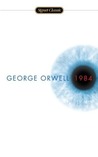
1984

19841984 by George Orwell
My rating: 4 of 5 stars

Some people think that George Orwell got everything right, just missed the date by 30 years (that it should be 2014). I'm here to tell you that that is false and ridiculous. How could anyone ever believe that? First of all, this is complete science fiction. I mean, look at the technology in the book. It's all based on spying on you. There are TVs that look back at you. As if that were possible. (By the way, did you hear about the awesome Xbox One, where the Kinect can monitor your heartbeat, hands, and eyes? They say it needs to connect to the internet every 24 hours, as well, I guess for updates or things like that. Surely not to upload your data. We know we can trust this, because it's made by Microsoft, a good ol' American company.) In the book, there's also microphones everywhere, capturing your conversations. Lining the streets and country with microphones would be impossible, and would catch all the noise that wasn't wanted, like footsteps and crickets. If only people used devices to talk into, that would make recording conversations much easier. Now, aside from technology, it would be impossible for our government to ever be so corrupt and untransparent. There's no way we would listen to political messages that told us everything was ok, things were getting better, and try to indoctrinate us to their side. Plus, we have two political parties, they only had one. For us to revert to only one, the one in power would have to abuse that power to supress the other side. That would never happen. Orwell got it wrong in that he completely missed the internet, where we can speak out and do whatever we want anonymously, and no one would ever collect data on what we do with the internet in order to monitor conversations or try to sell us stuff. Nope, I know I'm safe with Facebook. And we all know that if we found out the government was spying on us, we would never tolerate it. For that to happen, some big event, a disaster, would have to strike terror in our hearts, and then maybe the government would step in, supposedly for our safety. But nothing like that has happened, nor will it, since we all love each other and everyone loves the United States. I hope you all realize that this book is obsolete and doesn't even deserve mention anymore, as Orwell got everything wrong. We all know our biggest threat is a Korean man who has nuclear missiles, and our government is doing everything they can to stop him.
Please leave comments on this post. At the very least, let the NSA agent who's monitoring you while you read this know you recognize his hard work and dedication.
Not doing so would be rude.

View all my reviews

Tuesday, June 11, 2013

Fallen ebook

For any of you have been following my blog, you probably have noticed my short stories. Well, now they are available in one place, conveniently in ebook format (soon to come to kindle as well). It includes all the short stories on this blog, including the full version of Fallen (known as Apple on this site). The book also comes with the covers I’ve made, as well as the prologue for book one of Sage Eyes. Hope you enjoy, please support! Fallen and Other Short Stories, an Ebook by Matthew Barrett http://www.smashwords.com/books/view/325151

Tuesday, May 21, 2013

Ruins review

Ruins (Pathfinder, #2)Ruins by Orson Scott Card
My rating: 3 of 5 stars

I enjoys Orson Scott Cards' books, and read most of them, but sometimes, in some of his books, his characters become too powerful, in a way. Plus, the main character in nearly every book he writes is a precocious teenage boy. They're the only ones who can do what they do, but have very little temptation to do evil with it. The character in Treason by the end was way too powerful, Alvin in his Alvin Maker books could change everything, and the boy in his other series he's writing, beginning with the Lost Gate, also started feeling too powerful by being able to teleport wherever he wants. Their problems feel trivial because there is no one who can oppose them. This series is starting to feel the same. Rigg before had to depend on his friend to go back in time, but in this book he can do it alone. His friend obviously feels jealous, but it feels like half the book deals with him whining, or some other character, and the others trying to tell them why they're not worthless. Since the main character can go back in time, there's not much feeling of urgency, even though the world is supposed to be destroyed in a few years time. The ideas explored here are interesting, and it was an engaging read. The time travel is hard to understand at times, though. Some ideas got weird, like the mice, and other ideas seemed to jump all over. I was hoping the series would end with this book, but it looks like another one will be coming.Anyway, interesting book, but hopefully the next one will be more focused and will finish this, because the idea is already feeling stretched.

View all my reviews

Lord of the Rings Review

The Lord of the Rings (The Lord of the Rings, #1-3)The Lord of the Rings by J.R.R. Tolkien
My rating: 4 of 5 stars

Even though this is considered the beginning of modern fantasy and kicked off the genre and a bunch of copy cats, this isn't, in my opinion, the best fantasy ever. Especially the books, the way they're written. In reality, I feel the movies are better. Part of it is because Tolkien was more focused on his world, mythology, and language than he was on the actual story and characters. Don't get me wrong, it is a great story, epic, and affected me profoundly the first time I read it, even though I was in the sixth grade. A few years later, when the movies came out, I read them again, understood them better, but since then, haven't had the desire to read them again. They were a chore to read. So much history crammed in, songs, and other things to detract from the main story. Other parts were unnecessary, like the razing of the Shire, which I think was wisely taken out of the movies, as it was anticlimactic. The characters were flat, either almost perfectly good or perfectly evil. Even the races were stuck in their roles, the elves all good, the orcs evil, etc. It wasn't until later that I realized this is a story about the world created, the language used, the mythology of middle earth. Tolkien was more involved with the setting than the characters or the story. The story serves more as a tour of middle earth than anything else. Still, the story is interesting and epic, and Frodo defeating Sauron was an intense moment in fantasy literature. It served to inspire and mark me, help me come up with my own fantasy world (which I don't think copies his very much). So while there are flaws, buried underneath it there is a pretty good story and a well developed world.

View all my reviews

Assassin's Apprentice Review

Assassin's Apprentice (Farseer Trilogy, #1)Assassin's Apprentice by Robin Hobb
My rating: 3 of 5 stars

My experience with Robin Hobb up till now has not been good. I first read the Soldier's Son Trilogy, which I found nearly painful to read. The main character obsessed over his weight so much he felt like a girl, and was always depressed and nothing much seemed to happen. Admittedly, it's been a few years, so I might be oversimplifying, but I remember I did not enjoy it much. Then I read the first book of the Tawny Man series, which is a sequel to this series, although I didn't realize it. So I had no idea what was going on, and it moved really slow. So I came to this book with trepidation, but still, I had heard that Robin Hobb was such a great author, she had to have something good. I started reading it, and found it was a better experience than I feared.
The good
It was down to earth, not over the top like so much literature now. The world felt well realized, and the main character was far from overpowered.
The magic was interesting because so little was known about it. Fitz sensing animals was nothing special, but it was interesting that we don't know if he will go crazy like others who had the same ability. As for the Skill, still don't know much about it, but it does appear a lot subtler than most magic.
The villain wasn't overpowered either. No one is in complete control, but everyone is struggling to get some sort of power and keep it.
The bad
Having royalty with names like Shrewd, Regal, Chivalry, and then having to act out that attribute, was a little strange and out of place.
The main character felt more like a blank boy than someone with a real personality. He get depressed easily and ended up doing nothing for a while.
He was supposed to be training to be an assassin, but this is not believable at all. The only people he kills are soulless beings, and when given a real assignment, he can't do it. Sure, there should be moral questions, but Fitz never remotely seemed like he could ever be a real assassin. I knew he wouldn't kill his target at the end, so there was no surprise there.
The pacing was slow. Not as big a problem as some of the other books of hers, but I was in no hurry to finish it. There wasn't much suspense or anything to look forward to. I'm not even sure I feel compelled to read the next ones in the series. We'll see.
Overall, a solid book, but nothing really amazing in my opinion. Good in comparison to the other Robin Hobb books I have read.

View all my reviews

Thomas Covenant Review

The Chronicles of Thomas Covenant, the Unbeliever (The Chronicles of Thomas Covenant, #1-3)The Chronicles of Thomas Covenant, the Unbeliever by Stephen R. Donaldson
My rating: 3 of 5 stars

If you don't know what these books are about, Thomas Covenant is a modern leper who has lost his wife and most everything else. After an accident, he finds himself in "The Land", a land of fantasy creatures and people threatened by Lord Foul (the names in these books are not that original). Thomas' wedding ring is supposedly a powerful artifact to combat Lord Foul. But Thomas believes it's all in his head and doesn't think his choices matter. The people all believe in him, but he doesn't want them to. I wanted to like the books, but the writing style was very hard for me. Maybe I'm used to different styles, but it was hard for me to follow what was going on, and at times I got bored. I struggled to finish the first trilogy and couldn't bring myself to read the second. There were some good ideas, like Thomas refusing to shave to see if he would have a beard in his own world, although he then shaves it off and defeats the purpose. The concept, that you're responsible for your actions, whether they really affect other people or not, is interesting. Does it apply to things like World of Warcraft? Anyway, the descriptions didn't help me picture The Land very well, and Thomas was always whining and feeling sorry for himself, so it was a tough read. But it does take a different angle to fantasy than Lord of the Rings, where every character is perfectly good or evil.

View all my reviews