The grass bent beneath his boots as he stepped outside of the ribbon
box. What would it feel like if he went bare foot? Wet? Raspy? Like
carpet? Green spread out all around them, welcoming them to the small
island. Kaleb took off his helmet and took a whiff of the air. So fresh,
so salty. The ocean roared in the distance, jealous of the attention
the grass received.
"That's dangerous, you know," his partner Foelhe commented, walking past him.
Kaleb shrugged. "If anything happens to this piece of property, they'll
sew me right back up, and probably stick so many needles in my behind,
I'll look like one of those…what are they called again?"
"Porcupines."
"Yeah, one of those." He looked around, finally focusing on the sky.
Bluer than the ocean. Sure was different than from where he was from.
"Think we'll see one of them?"
"Doubt it."
"Stop playing around,
you two, we have a mission to fulfill," said Dalin, forty meters away,
walking on the beach with his own partner. His voice sounded muffled,
coming from the headset inside the helmet Kaleb was carrying. Foelhe
shook his head as Kaleb sheepishly put it back on.
The two of them
walked in silence until they reached the edge of the water. No sign of
threats. Maybe it wasn't so dangerous here as most people thought. It
certainly didn't look to be harboring danger. Kaleb watched the ocean
steal his footprints from the beach.
"Call down the ATV, this island
looks to be uninhabited, but to the northwest, satellites suggest there
are people living there. A wonder they never made it to this one."
Foelhe tapped something on his wrist. Kaleb did the same, instructing
the vehicle to drive over and deposit the boat in the water. He didn't
like the rubbery foam molding to his head nor the plastic visor that was
fogging up.
A few moments later, they were speeding to the
northwest. There were six of them altogether, three companionships. The
boat went fast enough to see the next island growing on the horizon, but
the fish in the water were dark blurs. Not even the screen in his visor
could identify them quickly enough. Governmentally issued, they were.
The ocean stretched out as far as they could see, no less infinite than
the stars. Each wave glistened in the sun like a show of lights. Kaleb
sighed. What would it be like to immerse himself under that surface,
without any body armor on? Opposite the empty vacuum of space, being
filled instead of emptied? He couldn't believe he was here; it didn't
feel real. So close to a world that touched each sense, yet a barrier
that held him back.
Other, larger shapes began swimming after their
boats. The shapes couldn't keep up, but it was obvious they were trying.
They weren't just fish. Still, the screen couldn't identify them.
Either it wasn't advanced enough to cut through the interference of the
water, or there was no file archived with information on these
creatures.
"What do you think those are?" he asked Foelhe. The only
response was a shake of the head within his helmet. The others didn't
seem interested either.
Soon they reached the beach, this time not
covered in fine sand but in larger pebbles. Some of the rocks seemed
sharp enough to cut open his feet, if he ran barefoot. Kaleb stepped
out, his feet creating small holes that filled themselves up with rocks
and water as soon as he left. His past prints on the world were being
erased along with the past. He only existed in the present.
It
seemed calm at first, but there was tension in the air, penetrating
their helmets. No one said anything, although Foelhe kept his hand at
his side, fingers clutching the handle reflexively.
The first sign
of intelligent life was a broken spear hidden in the rocks. At first it
looked like a wet stick from one of the trees, but the screen pointed
out that there was a sharp rock tied to it. It also pointed out that
something had urinated on it five hours ago, as well as a multitude of
other useless details. But it couldn't tell him what had been following
them.
"Is this an accurate level of their technology?" Dalin asked,
more to himself. "I wish those up high would have shared the classified
with us."
They stood there for a few moments, observing the spear,
as if it would suddenly start talking to them. Kaleb felt impatient.
There was life out there, waiting for them, but no one could get past
the spear and begin contact.
"Come on, Foelhe," he said on the
private channel. His partner looked at him wearily, sighed, and started
following him to the growth at the edge of the beach. The others glanced
at them, but then went back to analyzing the spear.
As soon as he
parted the first leaves, longer than his body, the alarms went off in
his suit. At first, he thought it was danger in front of him, but after a
moment with nothing happening, he realized the danger was behind.
Swiveling, he found Foelhe already rushing back to the others. The waves
were high, nearly engulfing the ATVs. Strange. Then his screen pointed
out the obvious. There were more than five others on the beach with him.
There looked to be about ten, with more coming from the sea.
The fish!
These fish had hands, feet, and heads like humans. Except they were
blue, with white stomachs and they were covered in fins, including their
faces, replacing their hair. Crawling out of the water, they started
rising onto their back legs. Some wore basic loin cloths, others
nothing, although there didn't seem to be anything to see. A few looked
feminine, but it wasn't as obvious as it would be on humans. His screen
pulled up close ups of one of the faces. It was smiling, but with the
sharpened teeth, the smile looked devious and dangerous. They approached
the men with little apparent fear.
One got close to Dalin and
spread his arms wide, still with that toothy grin, Dalin raised his gun,
but the creature just took hold of it, and shook it, like it was
shaking a hand. It was either mocking Dalin, or really playful and
innocent. Dalin took it as the former.
"Get away from me, you
monster!" he screamed. Kaleb heard it over the channel, but whether the
actual creature did, he wasn't certain. Dalin pulled his gun back and
aimed it at the blue humanoid.
"No Dalin!," Kaleb yelled. This was not their mission.
Too late. The gun tore a hole right through the light blue abdomen,
searing everything the energy touched. The creature collapsed, dead. The
others looked horrified. Some jumped back into the sea, others rushed
forward to really attack the humans this time. Kaleb found himself
running towards them, not sure what he hoped to accomplish.
Foelhe
was the next to act, Dalin shocked at what he had done. He shot another
of the blue men from afar. It fell back and its twisted bones could be
heard from where Kaleb was standing. With the help of his helmet, of
course, but that noise haunted him. Foelhe was going to take out another
when Kaleb pushed him to the side. They both fell down.
The others
with Dalin took aim, hesitantly. The hesitation cost them. Somehow, a
large wave reached them, pulling them down to the depths. They let go of
their guns and tried scrambling out, but out of the wave came more of
the blue things, grabbing them and preventing escape. As long as they
had their armor on, they would be all right, but if the creatures found a
way to break in, they would drown.
Kaleb watched helplessly as
three of them disappeared. Dalin was running, not trained against this
type of fear. Foelhe punched Kaleb off of him.
"What are you doing? We have to kill them, or they'll take us down with them."
Kaleb didn't have an answer, but still couldn't allow his companion to
slaughter the natives. Their job was to explore, make contact, and set
up a friendly base. Killing them all would put an end to that idea,
permanently. They might have ended it already.
His visor was full of
mud and pebbles, so he tried wiping it clean, but didn't get much off.
He did see Foelhe's figure get up, though, and take aim again. "Stop it,
Foelhe! We were to make contact, not come as conquerers."
"Maybe
these savages need conquerers," Foelhe said. Kaleb imagined him
sneering. "We were never going to lower ourselves to their level. We
were going to civilize them. Make them in our image. They have nothing
they can offer us."
"What about control of the waves? Maybe they could teach us," Kaleb tried to reason.
Foelhe snorted. "They weren't controlling the waves, they saw it rising
and swam in it. Now stop annoying me, I have to show them their place."
Kaleb stood up, placing himself between Foelhe and the natives. His
back camera showed that the natives stopped chasing Dalin and were
looking at him curiously. Maybe he could convince these they came in
peace.
"Kaleb, you are making a mistake. I didn't come here to try
to learn a language, or make peace offerings to these primitives. I came
because it was the only way to get these suits and guns outside of a
virtual sim. I want to hunt, and these violent monsters make the perfect
practice."
He couldn't believe what he was hearing. "You're being recorded, you know."
"And I'm fully justified in everything I do. I doubt the men up top
will care enough to listen, anyway." Foelhe waved his gun in Kaleb's
direction. Kaleb spread out his arms in protest.
"I am the senior companion," Foelhe said. "You have to obey my orders. So get out of my way."
Kaleb felt his suit struggle to obey, but he quickly overrode it. Foelhe's influence wasn't as complete as he thought.
"Fine. There are natives that want to kill me. You will not let me
defeat them myself. So I must use force." With that, he shot Kaleb.
It was a low setting, a warning shot, just stunning him. Fear entered
into his mind. Foelhe was more dangerous than any animal on this planet.
He had the mind of a killer, but had never had the chance to use it
until now.
Foelhe was between Kaleb and the natives. Kaleb tried to
focus his attention on himself. "You don't want to do this, we can still
make peace."
Looking at him, Foelhe laughed. "You're not going to
change me, Kaleb. If you don't want to be a murderer, sticking to some
vague principle of rightness, do that. But I am not limited by your
moral system."
By then, some of the blue natives had crept up behind
Foelhe. They looked ready to attack. Kaleb began to talk to Foelhe
again, ready to say anything to distract him, but Foelhe ignored him,
turned around, and started blasting the creatures.
The back camera.
The screams would haunt Kaleb's mind for many sleepless nights, if he
ever walked away from this. Taking out his own gun, he resolved to stop
this. His finger reached the trigger, but the vague principles of
rightness made him hesitate. The hesitation cost him, as Foelhe
immediately turned around and shot him. This time at full power.
Kaleb breathed, straining. Finally he was able to feel the sand as it
crept into his armor, now compromised. His bosses would not be happy
with that. But it did have a unique texture. Foelhe's voice was no
longer coming through the speakers, but his movements showed his glee.
Vision going double, Kaleb shifted his gun in the sand. Only one shot.
No suit-aided aiming. It was all him.
Kaleb stayed silent as
Foelhe's screams mixed with the weeping natives. Dalin and the others
were nowhere to be seen. Hopefully he had made some sort of difference.
It was cold, even though it wasn't supposed to be cold on the beach
except at night. The sun was shining. It looked different through the
atmosphere. Not so lonely.
Both Foelhe and Kaleb died around the
same time. Only thirteen point eight five seconds separating them. Dalin
and his subordinates remained down there, but Helman decided to let
them fend for themselves for a bit longer. His interest in Foelhe and
Kaleb occupied his mind right now.
He went to the pod. Gas steamed
out as it opened. Waving his hand to clear it away, he looked in, seeing
a familiar shape. Kaleb's body looked like a baby's, cuddled up in a
fetal position, with only skintight underwear on. He looked cold. Wires
were coming out of every part of him.
A meter away, another pod
opened. Helman put himself between the two. Foelhe's body looked much
the same as Kaleb's from this perspective, just that his skin was a bit
lighter.
Slowly, the two of them awoke, fingers twitching, eyes
moving before they finally opened. Kaleb let out a breath of relief.
Foelhe clutched the edge of the pod, eyes open wide.
"Well, good
news for both of you. You're not dead." He let them take that in, since
he was sure they didn't want to see him in an afterlife. "You never went
down to the surface. That was a lie. You're still here, in Zeta. We got
you all dressed up in your environmental suits, and had you sit down in
what you thought was the ribbon, then drugged you and brought you back
here."
"That sounds like a lot of work," Kaleb said, words blurred by a trembling mouth.
"The suits walked here on their own and deposited you," Helmen said
with his tight smile. "This whole thing was a test. We needed to know
how well you would handle it."
"So did we pass?" Foelhe asked, anger lacing his voice like an iceberg.
"I think we all know the answer of who passed and who didn't," Helman
said simply. Foelhe glared at him, but he didn't even see it as he was
looking at Kaleb. "Us men up top do listen."
"So what happens now?" Kaleb asked.
"You get to go down with others who have passed, if you want. You see,
none of our technology works down there, except for the most primitive
devices that don't rely on electricity. No one knows why that is, and we
need someone to find out. Someone who will establish relationships and
find the information we need," he said, finally looking at Foelhe. "Not
someone who will think he's better than the sentients down there,"
Kaleb smiled. "Someone to make first contact."

Thursday, May 16, 2013

Races, Species, Creatures, Cultures
Like I have mentioned in other posts, one of the ideas I want to
explore in my stories is how humans would react to other sentient
species or races. I want to use familiar concepts for fantasy, so right
now I don't have anything really new, but I don't know if they've all
been together before. The working structure I have set up for the races
are as follows.
Humans (Humans, dwarfs, centaurs, etcs) Norsh and Greek influence
Faery (Elves, fairies, nymphs, etc) Irish and Greek influence
Orcs (Orcs, goblins, ogres) European influence
Demons (Demons, devils, imps, etc) Christian influence
Undead (Skeletons, vampires, zombies, etc) European influence
Feral Creatures (Minotaurs, djinn, hydras, etc) Middle Eastern, Greek, and other influences
Looking over this, a lot does seem to come from Europe and especially Greek myth, partly because, as far as creating interesting creatures goes, they are some the richest, but other creatures from myths all over the world are welcome, and I am researching them. I just want to avoid creatures that are just big animals, like giant spiders, and too many half human half animal combinations, like centaurs, satyrs, dryads, etc. If there is something obvious that I am missing, please let me know in the comments.
As far as cultures go, I want to be much more diverse, taking from cultures all over the world and through history. For example, I would like to make some of the elven cultures mirroring principles of honor held in Japan, especially the before their integration into the modern world.
So many people think that their culture is the best and only one worth having, even though it is always changing through time and geography. Many conflicts in history have been with cultural clashes, everyone thinking their way of life was better. But if one journeys through different cultures, opening oneself up, they realize their way of life is but one in a buffett of many others. There are good and bad things in each culture, as well as good and bad people. We just have to get along, respecting differences.
Reblogged from http://sageeyesblog.wordpress.com/2013/01/06/races-species-creatures-cultures/
Wednesday, May 15, 2013
Magic Costs
In my last post, I talked a little about magic. One of the things
mentioned is that magic needs to have limits. One way to limit magic is
making it cost something. You basically need to make an economy for the
magic. So I compiled a list of costs that might be involved to use
magic. It is by no means exhaustive, and if you have any other ideas,
please comment.
The following are ideas that can be used as 'magic currency' and put a limit on the power of a magic user:
Mana, mp, mental energy
Physical energy (makes you tired)
Blood
Water
Rare ingredients (eye of newt, etc)
Sacrifice person, animal, body part, etc
Heat
Ingested metal (Mistborn series)
Color (Warbreaker)
Concentration
Memorization
Time
Strength
Age
Hunger
Electricity (technology)
Ammo (like guns)
Losing a sense (like sight)
Available only under certain circumstances (midsummer's eve, after liking this blog, etc)
Complex rite performed or symbol made
Making calculations
Dancing or singing
Using a special artifact (sword, wand, etc)
Faithfulness to a god or demon
Powerful emotions
Cards, dice, or luck
Lifeforce of an animal or person
Adherence to a strict code
Horoscopes
Having a likeness connected to an object or person (voodoo)
Literal money
Using a special language
And the list could go on and on. Any other costs you can think of, please comment. The more creative, the better. Magic doesn't always have to be portrayed as some old man reciting from a dusty tome.
Reblogged from http://sageeyesblog.wordpress.com/2013/01/21/magic-costs/
Magic

Magic and fantasy go hand in hand. Most fantasy stories have some sort of magic in them. Without it, the story would be nothing more than one in a medieval or similar setting. But what is magic? Basically, anything that causes the fantasy world to act differently than how we experience it here in reality. Here, we don't have people shooting lightning bolts from their hands, or summoning meteors, or animating brooms to clean up after you. Maybe in the future we can invent technology that lets us do that, but that would have to follow the laws of physics and would have a rational explanation. Magic doesn't have a rational explanation. Nor should it, in a way, but more on that later.
In some ways, magic can be a lot like superpowers. The main difference between fantasy and superhero genres are, besides the setting, the flexibility. Superheroes have set powers, and usually can't change them. Their powers are fairly limited, in comparison to magic. Even Superman, with all his might, has a set list of powers, mainly: flight, speed, strength, x-ray and laser vision, and super hearing. He doesn't, as far as I know, transform enemies into sheep and grow vines as a net to save Lois Lane from falling from the building for the fiftieth time, nor will he ever be able to. Magic, on the other hand, while different for each story, often lets its practioners learn from a wide variety of abilities. Sometimes spells are classed from the four elements, earth, water, fire, air, or from good and bad, or can be more spiritual. There are many ways of manifesting magic.
Often, who can use magic is a topic of great importance in fantasy. Usually, only certain people can. Sometimes, humans can't use it at all, only other races or creatures. Lord of the Rings is pretty much like this. The hobbits have no access to magic except through magical items. Really, only Gandalf has magic in the fellowship of the ring. Other books, only those born with magic can use it. Harry Potter is an example of this. Muggles will never learn magic, although sometimes they have children who can (Hermione). Others have everyone able to learn magic, to varying degrees. Not seen as often in books, in video games it is a little more common, especially RPGs and MMORPGs. In these, you usually choose a class which decides how much, if any, magic you can learn. Each fantasy world should be tailored to make sense with the system set up. Societies would usually revolve around magic users and their place within, whether as rulers, citizens, or outcasts.
Now, obviously magic needs a limit. If everyone has godlike powers, then it becomes meaningless. Even if only one person has such great power, it becomes meaningless. If the hero has power to wish the bad guys out of existence, then there is no story. If the bad guy can destroy the world with barely a thought, then there is no way to stop him. Usually, the antagonist of a story is more powerful than the heroes, to make him more of a challenge, but even he has limits. He might be sealed up in a prison or can only achieve his goals by sacrificing a princess of pure heart (and there aren't very many of those walking around). But there has to be limits, or the story is immediately boring and pointless. So often magic is developed into a system. There may be limits to how much you can handle (Wheel of Time), or how much you can use before becoming exhausted. There may be special ingredients needed to complete a spell, or difficult memorizations. Video games usually use MP (magic points) that are used up after each spell. Some might require great sacrifices. Others through music. There are many ways to set up systems of magic, and they can be precise systems where you know what makes something happen or they can be more fluid and less known what is powering them. Brandon Sanderson is a master of creating stories with well defined systems, and part of the fun of reading his books is figuring out how each system works. You can find out more on what he says on his blog.
It has been said that any technology advanced enough that people don't know how it works is like magic. If we take TV to a primitive people who has never been exposed to it, they might think it magic. This principle is especially true in science fiction, but many authors want to use it in fantasy as well. I personally don't like that so much, because if it can be fully explained, it ceases to be magic and starts to be science (or psuedoscience). Magic is all about wonder, about some power that can be accessed, but isn't fully understood, least of all by the audience. Fantasy, no matter how mature, should bring us back to childhood, where everything was magical: animals could think and speak in their own languages, brightly colored characters talked to you through the TV, monsters waited for you under your bed, Santa Claus gave you gifts and watched your every move, dragons flew through the clouds, stars winked at you and granted wishes, and mommy and daddy were superheroes.
So relive the magic and embrace your inner child. Because life would be too boring if we took it seriously.
Reblogged from http://sageeyesblog.wordpress.com/2013/01/20/magic/
Dragons

Dragons have invaded legends in many cultures of the world. From China to Europe, ancient to modern, these are probably the most famous creatures never to have existed (as far as we know). They come in many different forms and sizes, moralities, and intelligences. Some have wings like a bat and breathe fire. Others don't have wings, but still fly. The only animal in the Chinese calendar that doesn't exist is the dragon. So why are they so pervasive?
Traditional dragons have been enemies of mankind. They represent our fears and a challenge for man to overcome. They are huge, as we are afraid of things bigger than us. They can fly, going where we can't (especially before the invention of airplanes) and have greater mobility and speed, able to corner and outmanuever us. They breathe fire, something that normally only humans have access to, so they put themselves on a level with us, aside from fire's extremely destructive nature. They are similar to lizards, as opposed to us mammals, making them alien, aside from the hard scales that reflect the armor knights would wear. Many could speak and were as intelligent if not more intelligent than humans. They have keen senses and sometimes magical powers. With all these attributes, dragons represented the ultimate challenge men could face, especially in medieval Europe. Knights who could slay a dragon were the ultimate specimens of manhood, so it isn't surprising that legends show the knights of the round table and saints like George slaying dragons. Each challenge had to have a reward, so the dragons either guarded treasures or damsels or both.

Humanity doesn't have a natural enemy. While it is true some animals like wolves or tigers might kill individual humans or small groups, human society has nothing living that challenges it for dominance, aside from other societies and conflict within. So the theme of many fantasy stories is having some external force, like dragons, orcs, or even aliens, threatening humanity, to deflect the guilt we feel in being our own worst threat. It also deals with uniting humanity against a common threat, as there is an unspoken understanding that unless we have another group to fight against, we break into smaller groups and fight among ourselves, which is why utopias don't exist.
Dragons can also represent other things than threats or challenges. They can be symbols of earth or nature and might have access to ancient wisdom. They might act as godlike figures, for good or evil. They can be beautiful and represent the beauty of nature. They can even represent the human spirit, in a different form.
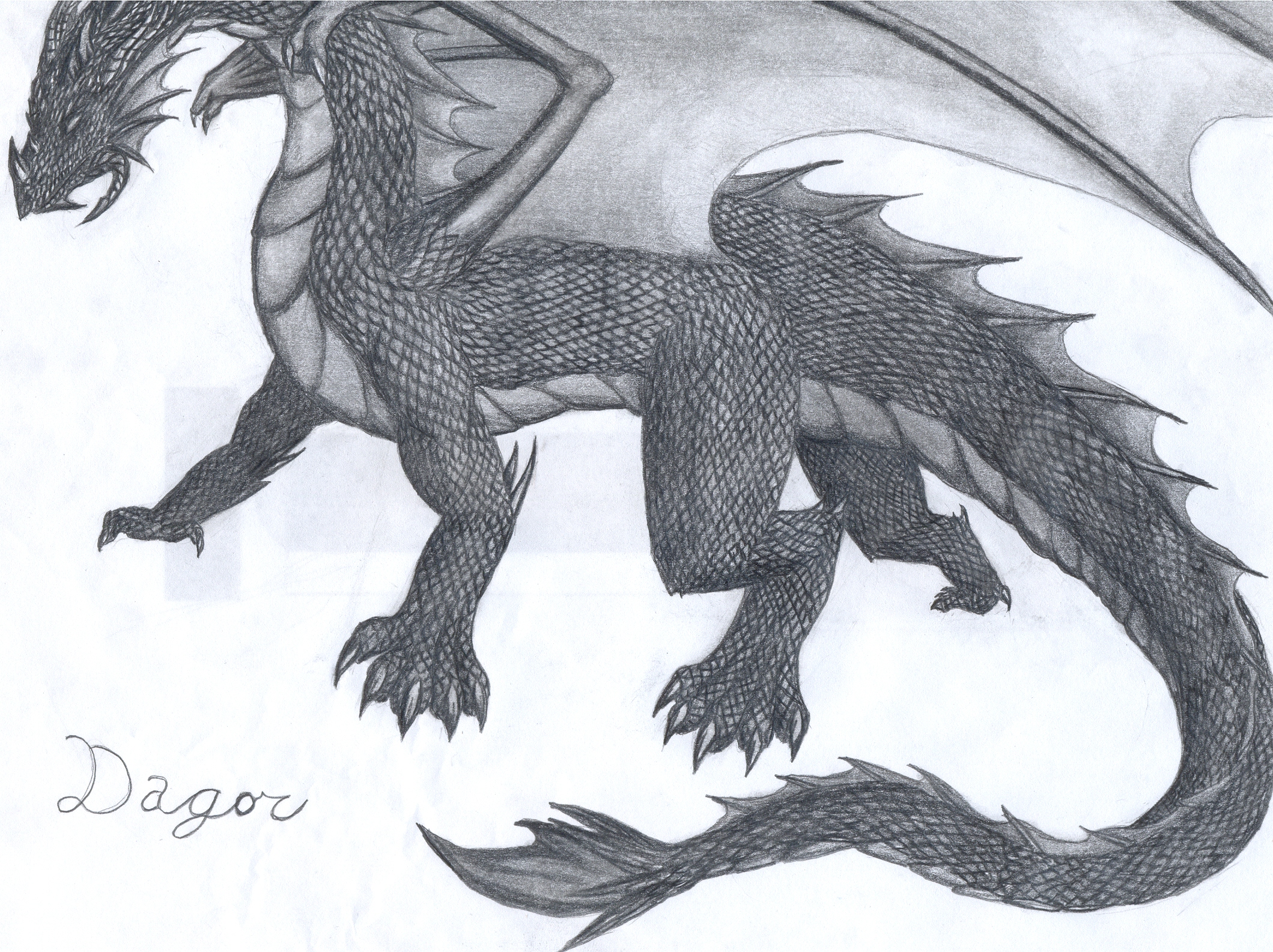
Some don't prefer to have dragons in their stories, but I do like them, if they're not overdone. Unlike some other tropes of fantasy, like elves and dwarves where few venture out of the set standards, dragons have a lot of potential for being used uniquely each time. Because of this, they can enrich a story instead of bogging it down, obviously when used correctly. Because fantasy is a genre of wonder, having these great beasts to wonder at fits well with the genre.
One last word on dragons. The largest land creature alive is the elephant, but they are small compared to dragons of myth. Elephants can't even jump because they would break their bones. Dragons fly. Obviously, the dragons we dream of can't exist in this world, and anyone writing about dragons might want to consider that, either changing their world or figuring out how dragons would reasonably exist. Magic is the most obvious answer, what most people use, or they just don't even want to think of the ramifications. Now you might ask, what about dinosaurs? Pterodacyls flew, and they were bigger dinosaurs than elephants. If they existed, dragons shouldn't be too much of a stretch. Except they might have lived in conditions much different than ours. I read through this site, www.dinosaurtheory.com, and I'm not sure if the science is correct, it doesn't seem to be a very popular theory, or at least widespread, but it does at least make you think. I suggest you read it just to get thinking about worldbuilding and to analyze the world we live in. It is not so permanent and common as we might think.
Here be dragons.
Reblogged from http://sageeyesblog.wordpress.com/2013/01/19/dragons/

Fantasy And Religion
This is an interesting topic, because there are so many way to
approach this. I will only comment briefly for now, but I will try to
provoke thoughtfulness. One way of showing religion in a fantasy story
is having a religion, often times based off of Greek or other ancient
myths, and having it be real. Gods are real, and they interact with
humans, and they give humans powers. Like the Greek gods, they are
imperfect, have their jealousies and wrath, and sometimes can be jerks.
The people can decide which god to worship, or sometimes decide not to
worship at all, because they are not worth worshiping, being imperfect,
human. Basically these gods are powerful immortals. There was a series
called The Tidelords by Jennifer Fallon that
dealt with this idea. I'm a bit ambivalent about the ending, but the
series was interesting. Other stories show these types of gods as
representative of forces or ideas, again like the Greeks. American Gods by Neil Gaiman
dealt with this idea, and if the people stopped believing, the gods
lost strength. Others have done the same. Sometimes, there is no god,
and the author is clear on that point. I personally don't enjoy the idea
of fantasy telling me there is no god or supreme being, since there is
magic and prophecy, which has to come from somewhere. Many authors who
don't create their own gods imply that their world is like ours: most
people aren't sure one way or another. Sometimes there are false gods,
who deceive, or false priests.
There are many way to portray religion, but often the default, which in my opinion is entirely too easy and lazy, is to have the position of religion being bad, that the leaders are corrupt and want power, and sometimes the plot is about unmasking them. While there is no doubt that has been the case in our world many times, it is too simplistic to say that there is nothing good about religion and it is all false. Much good has come from religion, as well as bad, just like any other human (imperfect) institution. So portraying religion as evil or only for the foolish, when so many good and wise people in the real world believe devoutly, is foolishness in itself. There must be something good in the religions portrayed, or no one in the imaginary world would flock to them. Humans need to believe in something. Even science can be called a religion. Anyway, my point was not to offend anyone out there. you probably guessed I'm religious. I don't hate anyone for not believing, and I see why many people choose not to believe in any organized religion, but if you're writing a book and you want to include this topic, there should be some balance, even if you're an atheist. I hope this gets people thinking, at least.
Reblogged from http://sageeyesblog.wordpress.com/2013/01/17/religion-and-fantasy/
Fantasy Races
One of the themes in my books is racism, and so I wanted to have
different races to explore that. How would humans act if confronted with
another race or species that was as smart as they were. Science fiction
sometimes deals with that, finding alien races, but fantasy does as
well. There are the normal ones, like dwarves, elves, orcs, etc. Some
authors, like Tolkien, have used these familiar races (or in his case,
practically invented them), while others create their own races, often
similar but with different names (trollocs as orcs from The Wheel of
Time). Others just stay with humans and maybe some creatures (Song of
Fire and Ice). I am writing thinking of using the familiar races and
creatures, because they are familiar. I will add my own take on them,
but right now, the names are the same. I felt that just changing the
names wouldn't do much since people will think of them that way anyway.
Anyone have any ideas on this? Comments? Should I have made some
completely different races that don't look like humans at all? Would
people be able to identify with them if I didn't? I feel like taking the
Harry Potter approach, and using the familiar, although in a different
way. But maybe someone can convince me to be completely original with
this. Who knows?
Reblogged from http://sageeyesblog.wordpress.com/2012/12/30/fantasy-races/
Subscribe to:
Posts (Atom)